
Supply chains generate data at every step, from purchase orders to warehouse movements to carrier scans, but it rarely lands in one place. We build Power BI and Microsoft Fabric reporting that joins ERP, warehouse and carrier data, so you can see delivery performance, stock position and the real cost of serving each customer.
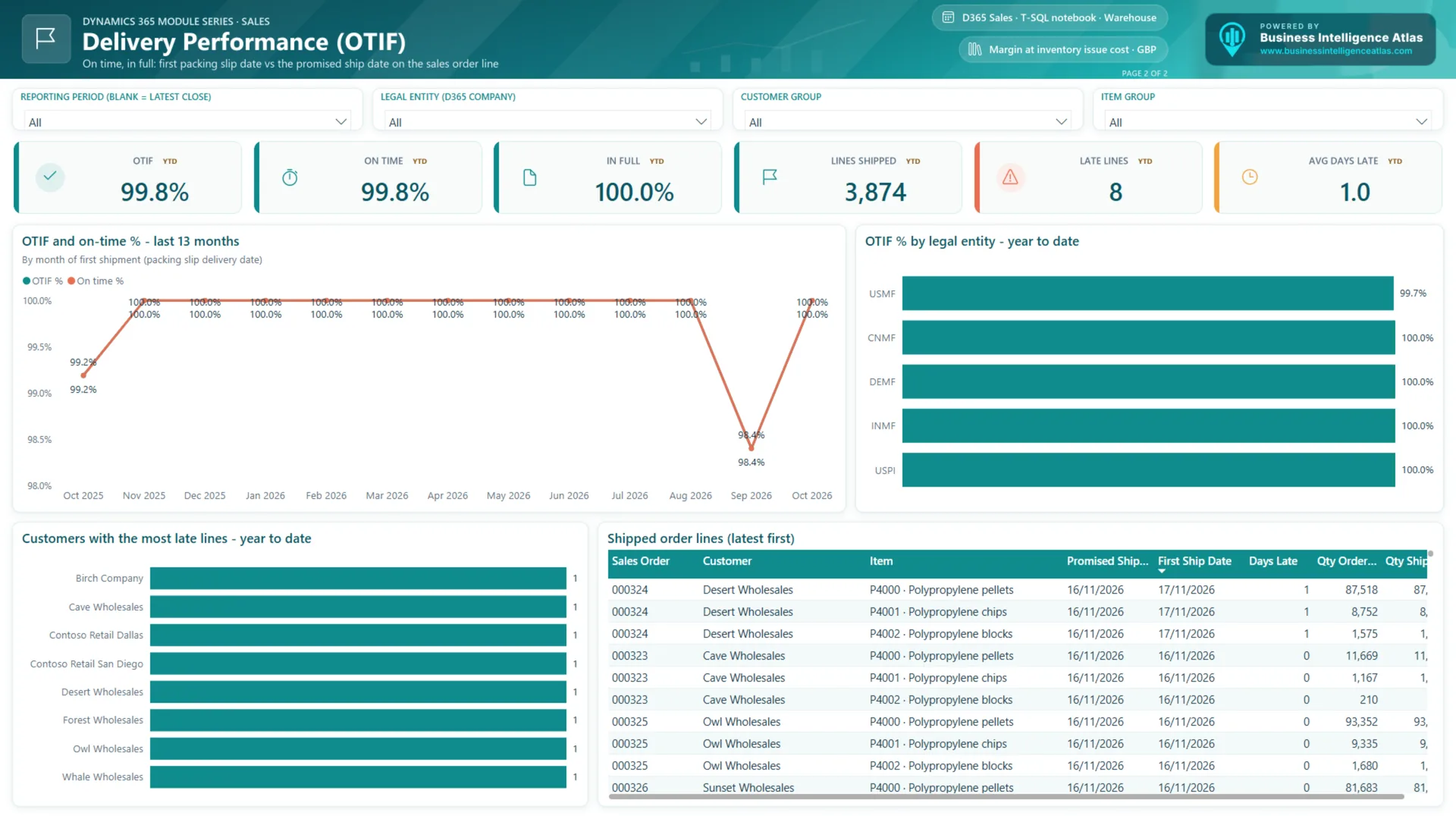
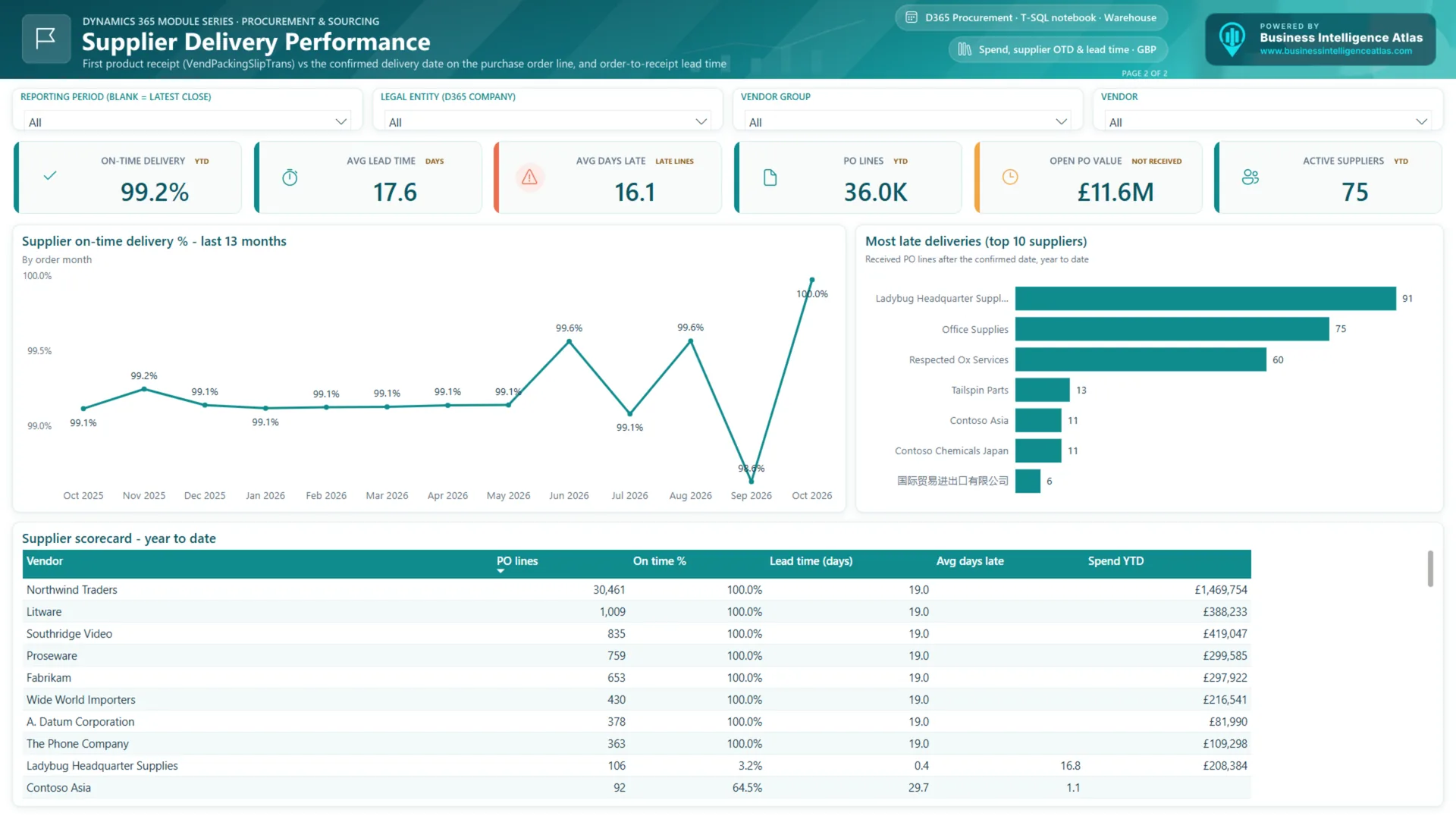
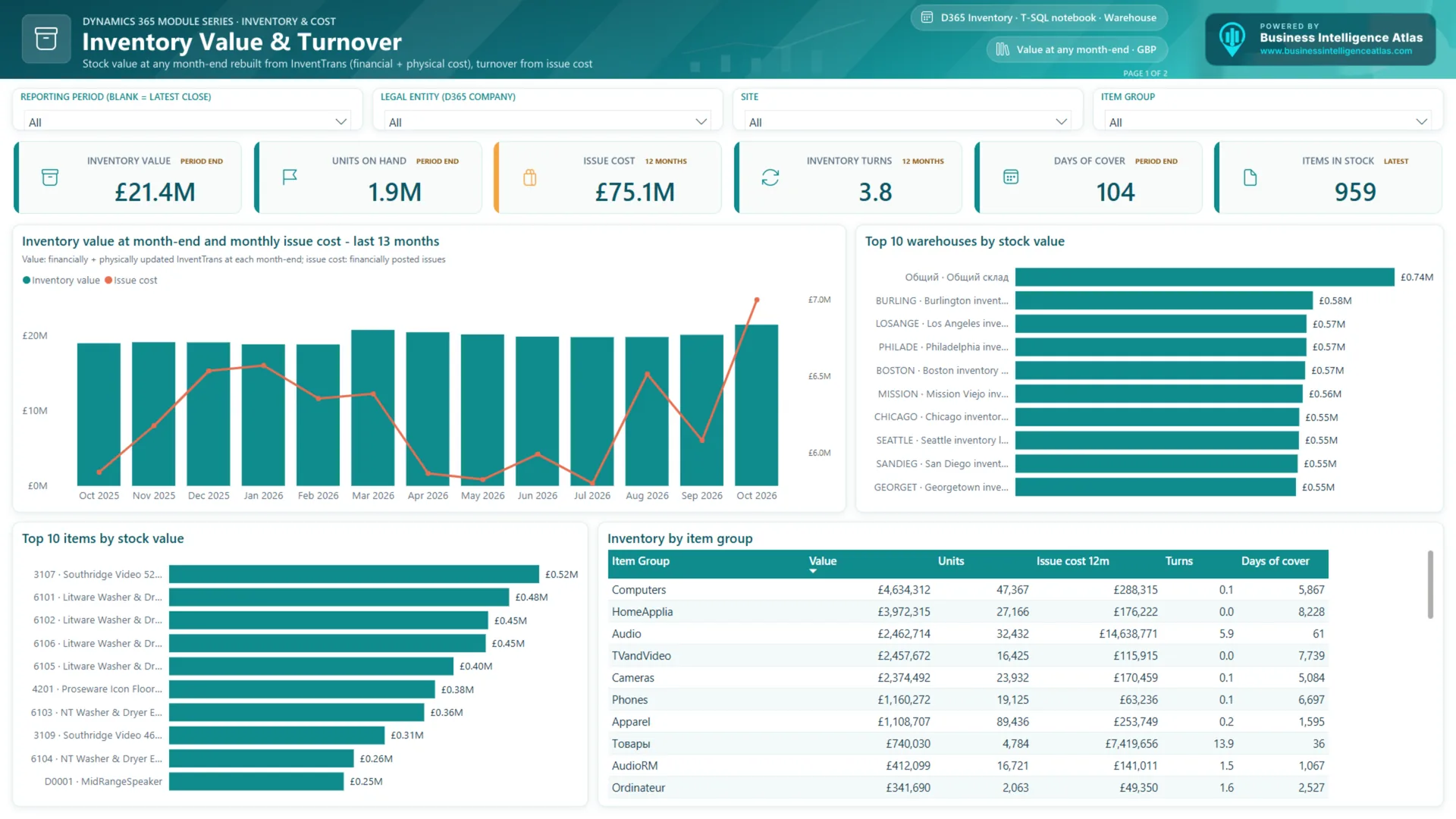
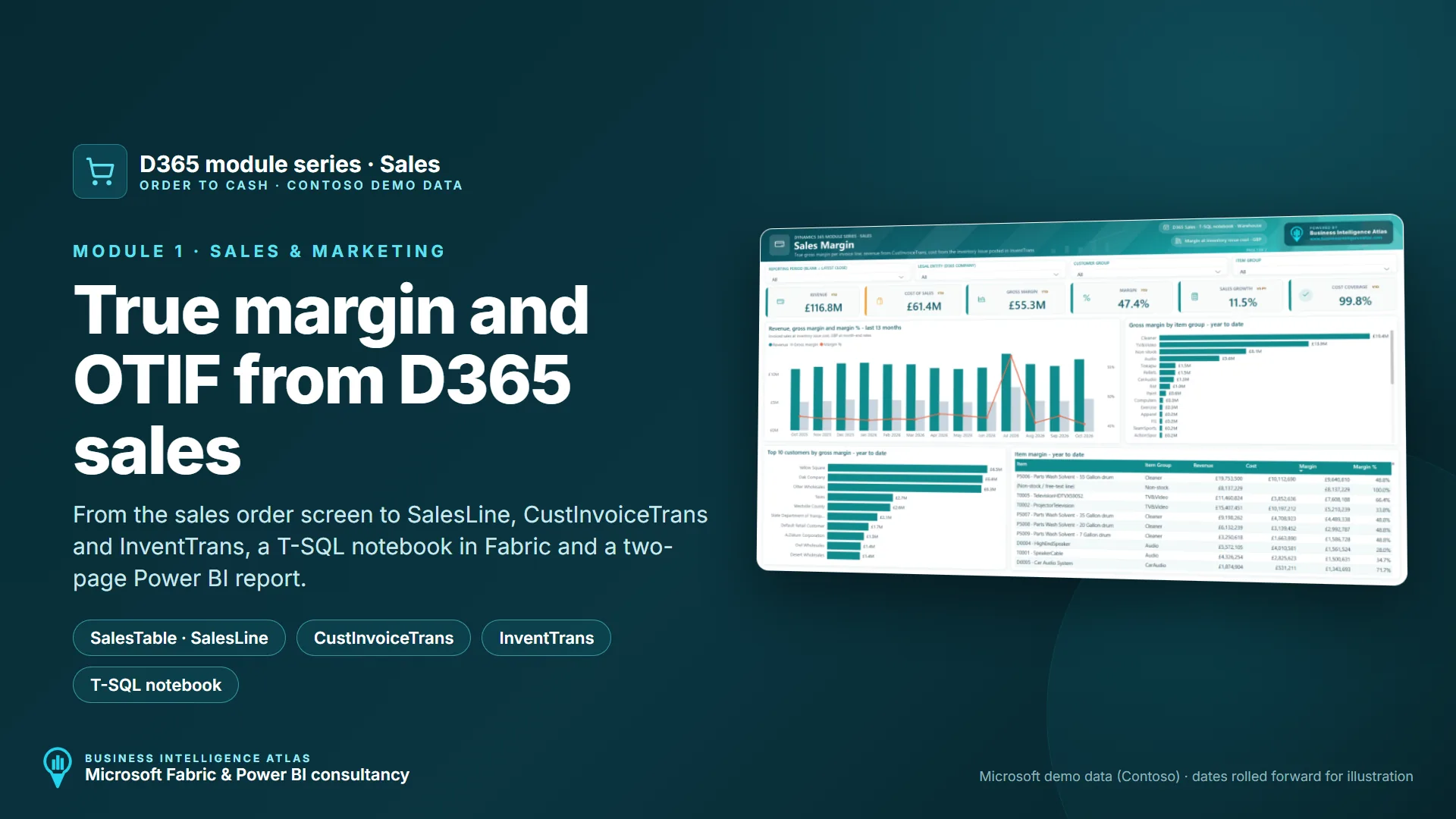
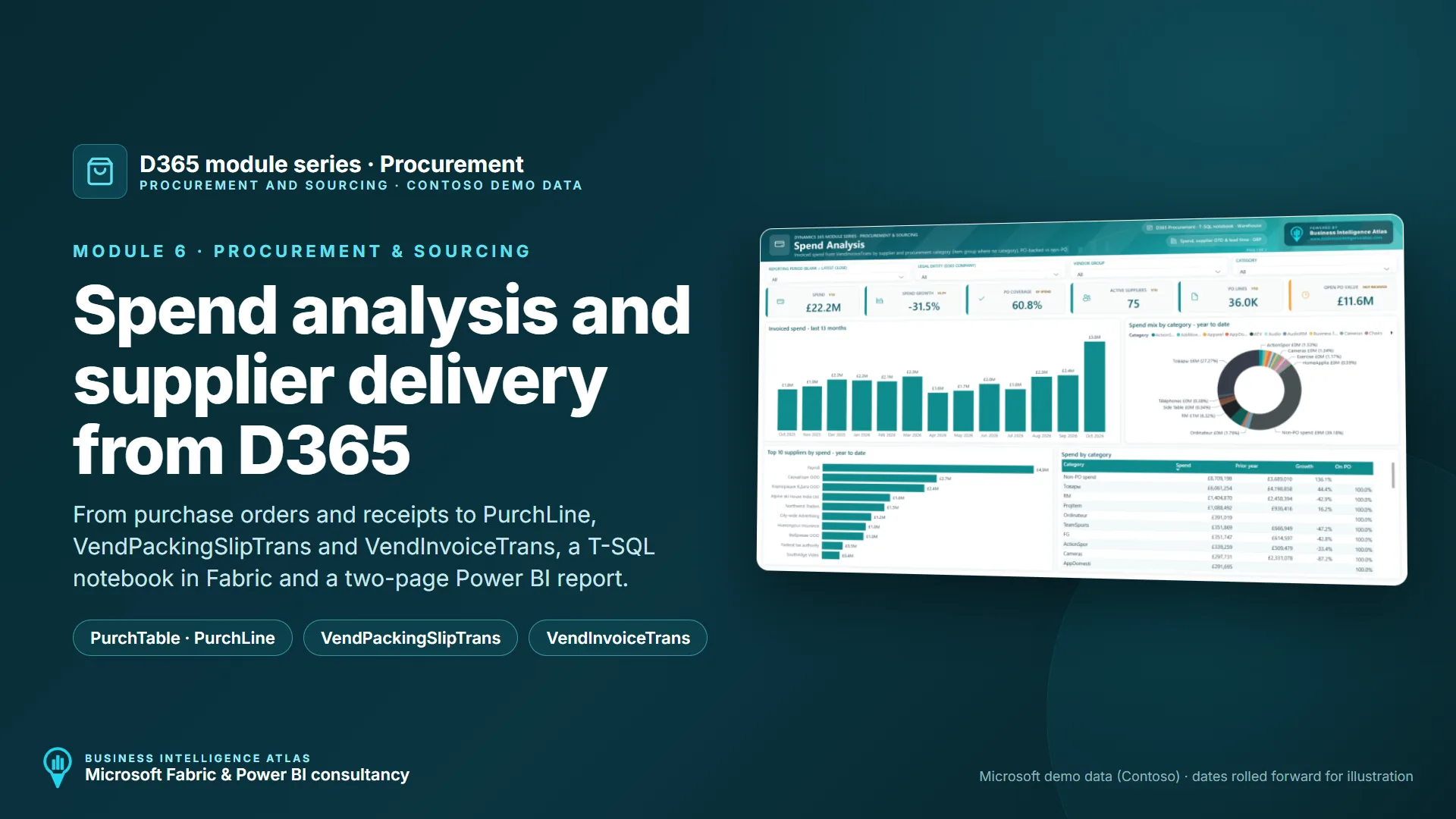
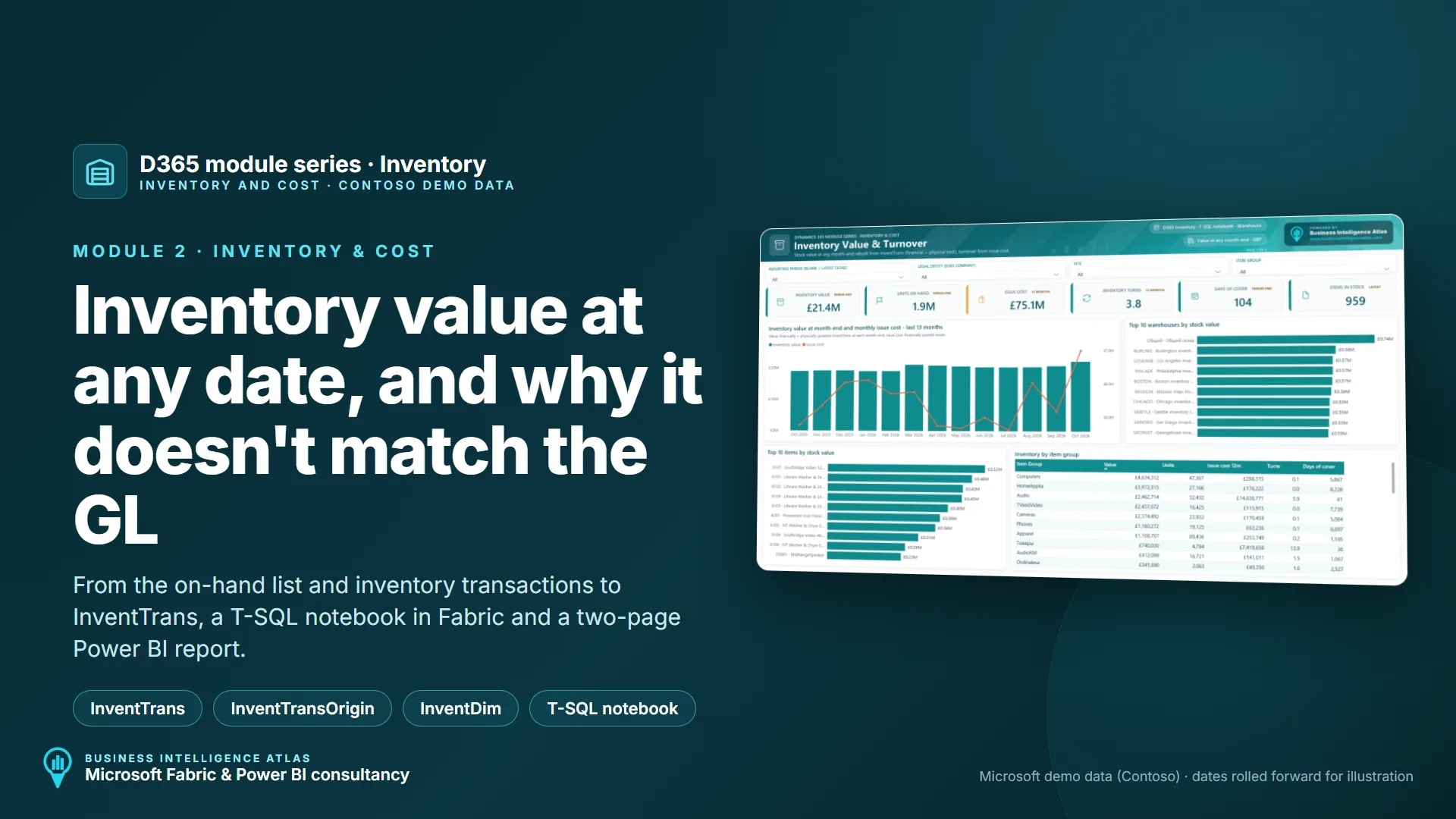
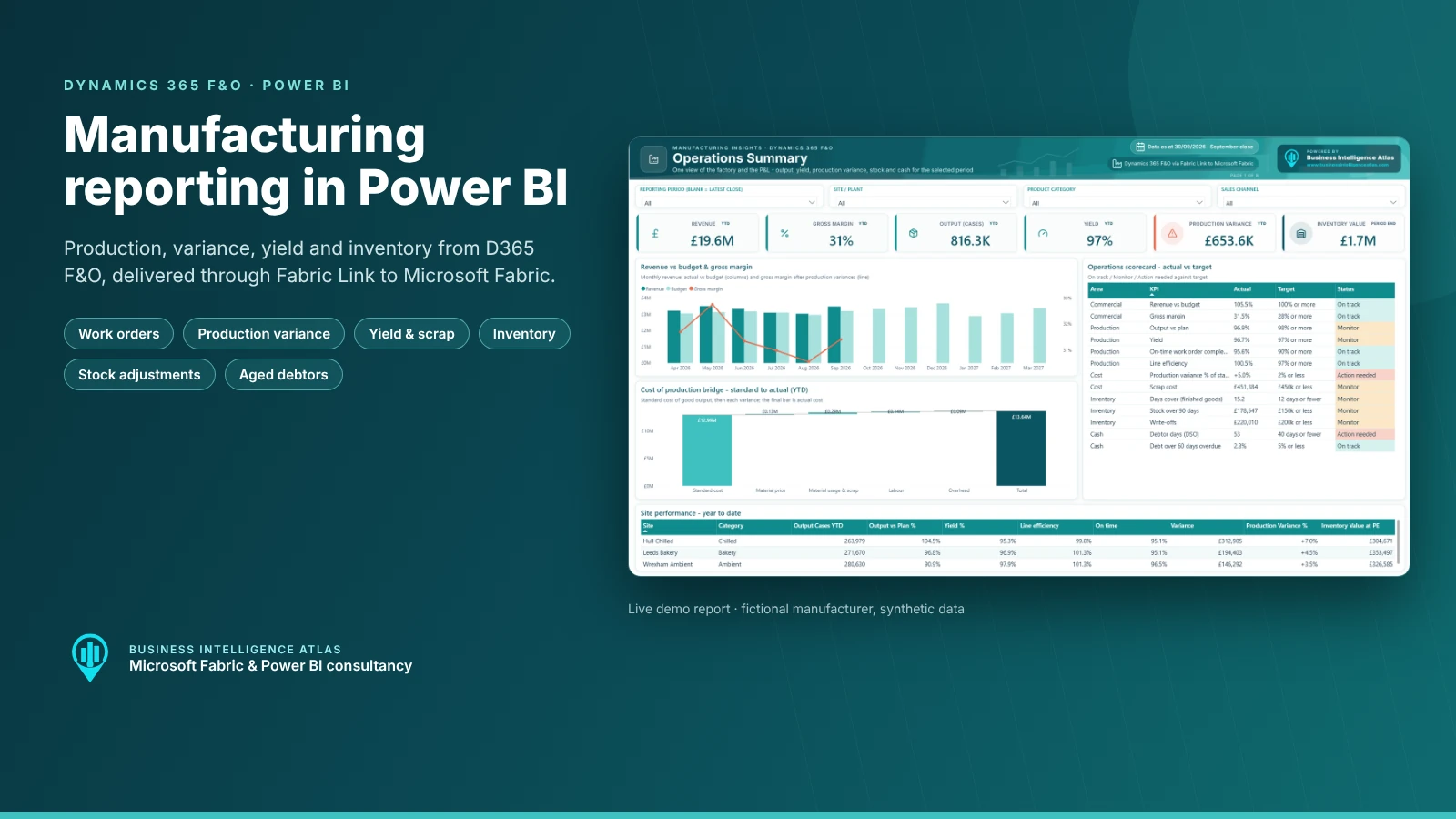
See it built: our Dynamics 365 series covers on-time-in-full delivery and true margin, supplier on-time delivery and spend, inventory value and slow-moving stock and manufacturing. Browse all supply chain reporting insights.
Supply chain and logistics reporting
Shipment and delivery tracking
Carrier tracking events loaded through APIs, with delivery status, exceptions and failed deliveries visible by carrier, route and customer.
On-time, in-full
OTIF, lead times and delivery performance against promise, by supplier, carrier, site and customer.
Inventory and warehouse
Stock levels, days cover, ageing, stock adjustments and warehouse throughput across sites.
Cost-to-serve
Freight, fulfilment, packaging and platform costs allocated to customers, orders and products to show true margin.
Procurement and suppliers
Purchase orders, supplier lead times, price variance and supplier performance.
Planning and demand
Sales and demand trends against stock and production plans, with exceptions flagged early.
Data sources
- ERP: Dynamics 365 Finance and Supply Chain Management, Business Central, SAP and others
- Warehouse and transport management systems
- Carrier and shipment tracking APIs, loaded incrementally with Fabric notebooks
- eCommerce and order management platforms
- Excel plans, rate cards and standard costs
Supply chain experience
We integrated a shipment tracking API into a Microsoft Fabric platform for a SaaS business with print and logistics operations, and built cost-to-serve and margin analysis combining platform, print and delivery costs at customer level. For a national food manufacturer we built stock transaction, stock adjustment and work order reporting from Dynamics 365. We have also supported a major supermarket’s supply and logistics data during its Azure migration, and built dashboards for an industrial engineering business combining SAP HANA and Salesforce data.
Supply chain demos
| Demo | What it shows |
|---|---|
| Sales margin and OTIF | On-time-in-full delivery and margin from posted inventory cost |
| Procurement and supplier delivery | Spend analysis, PO coverage and supplier on-time delivery |
| Inventory value | Value at any date, slow-moving stock and GL reconciliation |
| Manufacturing reporting | Output vs plan, yield, scrap and production variance |
| Production reporting | Cost variance, schedule adherence and hours |
| Retail and commerce | Store performance and market-basket analysis |
Supply chain reporting FAQs
Can you load carrier tracking data into Power BI?
Yes. Tracking APIs can be called from Fabric notebooks on a schedule, with incremental loads and credentials stored securely in Azure Key Vault.
How do you calculate cost-to-serve?
By collecting freight, fulfilment, packaging and platform costs, agreeing allocation rules with finance and applying them at order or customer level in the semantic model.
Do you work with Dynamics 365 Supply Chain Management?
Yes, using Fabric Link for Dataverse. See Dynamics 365 F&O reporting with Fabric.
Can we get alerts for late deliveries?
Yes. Fabric Activator or Power BI alerts can notify teams when exceptions such as late or failed deliveries appear.
See every shipment and what it costs
Book a call to discuss your ERP, warehouse and carrier data.